
If water is where it should not be, the next few hours matter more than almost anything else. Call (470) 600-7150 to get connected with local water damage restoration help in Atlanta. The goal of the call is to ask the right questions, explain what usually happens next, and give you an honest read on timing before anyone is sent to your property.
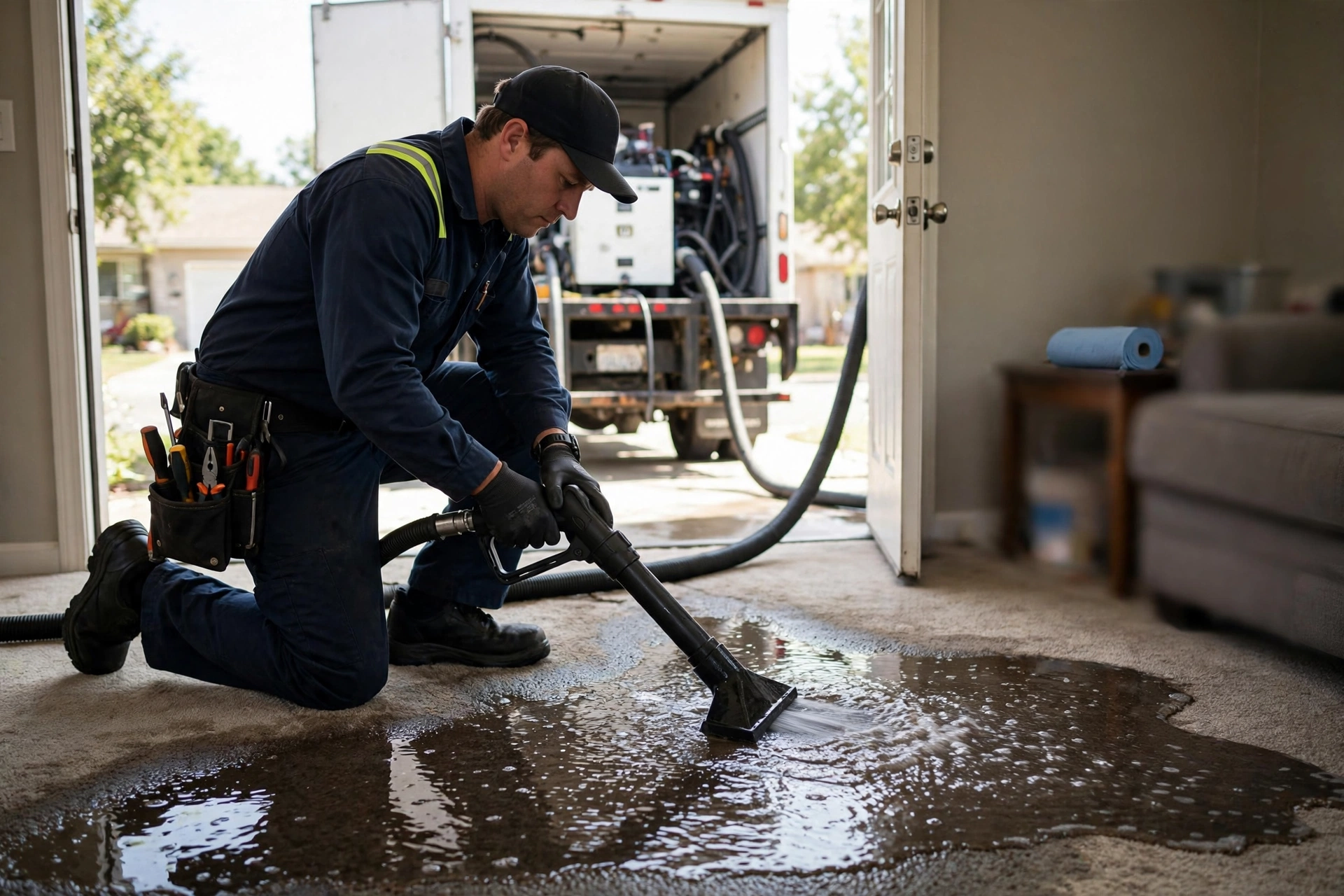
What Water Damage Restoration Actually Involves
People often use “water damage restoration,” “water mitigation,” and “water removal” as if they mean the same thing. They overlap, but each describes a different stage of the job, and understanding the difference helps you ask better questions when you call anyone.
Mitigation is the emergency stage: stopping the source if it has not been stopped, removing standing water, and beginning to dry the structure so the damage does not keep spreading. Restoration is the broader process that includes mitigation and then carries through cleaning, sanitizing, deodorizing, and returning the property to a safe, usable condition. Repair or reconstruction is what comes last, when materials that could not be saved, such as saturated drywall, insulation, flooring, or cabinetry, are replaced. A good restoration plan keeps all three stages in view from the first phone call, because the choices made in the first day shape how much has to be rebuilt later.
Water Damage Services in Atlanta
Most calls fall into one of six situations. Here is a short overview of each, with a full page for anyone who wants the details.
🚨 Emergency Water Removal
Standing water in a living space is the most urgent version of the problem. Emergency water removal in Atlanta covers how water is extracted, what equipment is normally used, and what you can safely do while you wait.
💨 Water Damage Mitigation & Structural Drying
Removing the visible water is only the start. Water damage mitigation and structural drying explains how moisture hidden in walls, floors, and insulation is measured and dried before it turns into mold or rot.
🌊 Flood Damage Restoration
Flood water from storms, creeks, and overwhelmed drainage is treated very differently from a clean supply-line leak. Flood damage restoration and cleanup covers contaminated water, safety, and insurance realities.
🔧 Burst Pipe Water Damage
Winter freezes and aging plumbing both put Atlanta homes at risk. Burst pipe water damage explains what to do in the first minutes and how the drying and repair process works.
🏚️ Basement & Crawl Space Water Damage
Many intown Atlanta homes have basements or crawl spaces that collect water after heavy rain. Basement and crawl space water damage covers causes, drying, and preventing a repeat.
🛠️ Water Damage Repair & Reconstruction
Once the property is dry, materials that cannot be saved need to be replaced. Water damage repair and reconstruction covers drywall, flooring, insulation, and finishing work.
What to Do in the First Hour
You do not need to be an expert to make the first hour count. These steps apply to most situations and are safe for most people to follow while help is being arranged:
- Stop the source if you can do it safely. For a burst pipe or a failed appliance line, close the nearest shut-off valve or the main water valve.
- Think about electricity before you touch anything. If water is near outlets, appliances, or light fixtures, or if a ceiling is sagging, stay out of the area and shut off power to that part of the house at the breaker panel only if you can reach the panel without standing in water.
- Protect people and pets. Keep everyone out of rooms with standing water, sagging ceilings, or any sign of sewage.
- Take photos and short videos before you move anything. Photograph the water, the source, and the damaged items. This is valuable for any insurance claim.
- Move small valuables and papers to a dry place. Lift furniture legs onto foil or plastic blocks if you can do it without strain.
- Call for help early. Every hour water sits in a building, it travels farther into materials, and drying takes longer.
Why Atlanta Water Damage Has Its Own Patterns
Atlanta’s water damage problems come from four different directions, and they tend to arrive in different seasons.
Heavy rain and flash flooding. The Atlanta area gets intense storms, and the ground here is largely clay-rich Piedmont soil that drains slowly once it is saturated. In September 2009, days of heavy rain led to catastrophic flooding across metro Atlanta; the National Weather Service estimates that 10 to 20 inches of rain fell in under 24 hours at the height of the event, and the U.S. Geological Survey reports that FEMA counted 16,981 homes affected across the state. More recently, during Hurricane Helene in September 2024, the National Weather Service reported widespread rainfall of 7 to 10 inches across much of the area, with localized totals of 11 to 14 inches in a swath across metro Atlanta, and flash flood emergencies were issued for parts of the metro. Events like these are extreme, but ordinary summer thunderstorms can also overwhelm gutters, drains, and sewer lines.
Winter freezes. Atlanta does not get cold often, and that is exactly the problem. Homes and apartment buildings here are frequently not built or insulated for prolonged freezing weather. After the arctic blast that hit around Christmas 2022, news outlets including Georgia Public Broadcasting and 11Alive reported burst pipes and sprinkler lines flooding apartment buildings, condominiums, and commercial properties across the metro when frozen pipes thawed.
Older intown housing. Neighborhoods like Grant Park, Inman Park, and Virginia-Highland are full of homes that are a century old or close to it. Many have original cast-iron drain lines, aging supply pipes, crawl spaces, and unfinished basements, all of which are common places for slow leaks and repeat water intrusion.
Multi-unit buildings. Midtown and Buckhead have many condos and apartment buildings, where one failed supply line, sprinkler, or appliance can send water through several units and floors before anyone notices.
The Three Categories of Water
The restoration industry commonly sorts water damage into three categories, and the category changes what can be saved and how the work is done.
| Category | Typical Sources | What It Means |
|---|---|---|
| Category 1 (clean) | Broken supply line, faucet or tub overflow, rainwater coming through a leak | Starts clean, but can degrade into Category 2 if it sits, so speed matters |
| Category 2 (gray) | Washing machine or dishwasher overflow, toilet overflow without solids, sump pump failure | Contains contaminants that can cause illness; porous materials like carpet padding usually need to be removed |
| Category 3 (black) | Sewage backup, creek or river flood water, standing water that has been present for a long time | Considered grossly contaminated; requires protective equipment, and affected porous materials are typically removed rather than dried |
How Restoration Works, Step by Step
Call and describe what happened
Tell the person on the phone where the water came from, how long it has been there, and what rooms and materials are affected. This determines urgency and what equipment is likely needed.
Inspection and moisture mapping
The affected area is inspected with moisture meters and, where appropriate, thermal imaging to find water that is not visible, such as moisture inside walls or beneath flooring.
Water extraction
Standing water is removed with pumps and extraction equipment. Removing bulk water quickly is the single biggest factor in limiting how far damage spreads.
Structural drying and dehumidification
Air movers and dehumidifiers are set up to pull remaining moisture out of materials. Readings are checked over several days until the structure reaches normal dry levels.
Cleaning, sanitizing, and deodorizing
Surfaces and salvageable belongings are cleaned, and affected areas are treated to control bacteria and odor, depending on the water category.
Repair and rebuild
Materials that could not be dried safely are replaced so the space is fully usable again.
How Long Does Drying Take?
Drying time depends on how much water there was, what it soaked into, and how humid the building is. As a general rule, structural drying commonly takes several days, often somewhere around three to five, and can take longer for thick materials such as hardwood, plaster, or wet insulation, or in Atlanta’s humid summers when the outside air adds moisture. Drying is confirmed with measurements, not by how a surface feels, because a wall can feel dry to the touch while still holding moisture inside.
Mold and the 24 to 48 Hour Window
Mold needs moisture, a food source such as drywall paper or wood, and time. The U.S. Environmental Protection Agency advises that most mold growth can be prevented if wet materials are dried within 24 to 48 hours. Atlanta’s warm, humid climate makes that window especially important, which is one reason not to wait for a slow leak to “dry out on its own.” If you can already see or smell mold, mention it when you call so the right precautions are planned.
Insurance and Documentation
Most homeowners policies cover water damage that is sudden and accidental, such as a pipe that bursts, but they often exclude flood water that rises from outside, and sewer or drain backup frequently requires a separate endorsement. Flood coverage usually comes from a separate flood policy, and those policies commonly have a waiting period before they take effect. Because every policy is different, read yours or call your agent early. Photos, videos, an inventory of damaged items, and a written record of what was done and when will make any claim smoother, and most insurers expect you to take reasonable steps to prevent further damage.
What Affects the Cost of Water Damage Restoration
No honest company can quote an exact price without seeing the loss, because several factors change the scope of work:
- The category of water, since contaminated water requires more protection and more removal of materials.
- How long the water has been present, since delay increases both the area affected and the drying time.
- The size of the area and the materials involved, such as carpet, hardwood, drywall, or plaster.
- Access, such as a crawl space, a tight basement, or an upper floor of a multi-unit building.
- How much needs to be rebuilt after drying is complete.
Pricing and scope are discussed before work begins, so there are no surprises on the invoice.
Common Mistakes That Make Water Damage Worse
- Waiting to see if it dries on its own, which gives mold time to start.
- Using a household vacuum on standing water, which is an electrical hazard.
- Assuming a surface that feels dry is dry, when moisture may remain inside walls or under flooring.
- Painting or covering stained drywall or ceilings before the moisture source is found and dried.
- Walking under a sagging ceiling, which can collapse without warning.
- Throwing away damaged items before photographing them for insurance.
Areas We Serve in Atlanta
Help is available across Atlanta, with particular focus on five intown neighborhoods that each bring different water damage risks:
- Buckhead — large estates and high-rise buildings, with creek flooding history nearby.
- Midtown — condos and apartments where one leak can affect several units.
- Grant Park — Victorian-era and craftsman homes with aging plumbing.
- Inman Park — Atlanta’s first planned suburb, with historic homes and older drainage systems.
- Virginia-Highland — early 20th-century bungalows with crawl spaces and older pipes.
If your neighborhood is not listed, call anyway. Coverage is not limited to these five areas, and it takes one phone call to confirm your address.
Questions Worth Asking Any Restoration Company
Whoever you end up working with, these questions will tell you a lot before you commit:
- Will someone inspect and measure moisture before work starts, or is the plan a guess?
- What equipment will be used, and how will you know when the structure is actually dry?
- Can I get the scope of work and pricing in writing before anything begins?
- How will documentation be handled for my insurance claim?
- What happens if hidden moisture or mold is found later?
Why Atlanta Residents Call AquaRescue
Water damage is stressful, and most people call at their worst moment. The goal of every call is simple: understand what happened, explain what comes next in plain language, and get the right help moving. Local familiarity matters here. A slow drain-line leak in a 100-year-old Inman Park home is a different problem from a burst sprinkler in a Midtown high-rise, and both are different from creek flood water in a Buckhead basement. Knowing the difference helps things move faster and go right the first time.